
Reviewing AI-written PRs sucks
Agents write the code, humans review all of it. An inefficient way to work and needless suffering, and four questions to get out of it.

Translated from French with AI. Read the original.

“I loved designing code. Reviewing AI-written PRs sucks.”
A developer told me that a few weeks ago. Her passion for the job had grown out of creating algorithms. She cared about how code was built and enjoyed shaping that material. The arrival of agents took that pleasure away. Instead, she reviews code she didn’t write, and wouldn’t have written that way.
I was coaching her team and trying to convince them to use AI more. My conviction: used well, it lets you produce better code, more easily.
We weren’t on the same page. What they knew of AI was PRs generated by agents with no real guidance. The more AI we used, the more mediocre PRs they would have to swallow. With that volume, they would be tempted to merge as is, because nobody wants to fix it themselves. The code would get more verbose and less well designed, and we would end up accepting a lower bar than before. So they resisted.
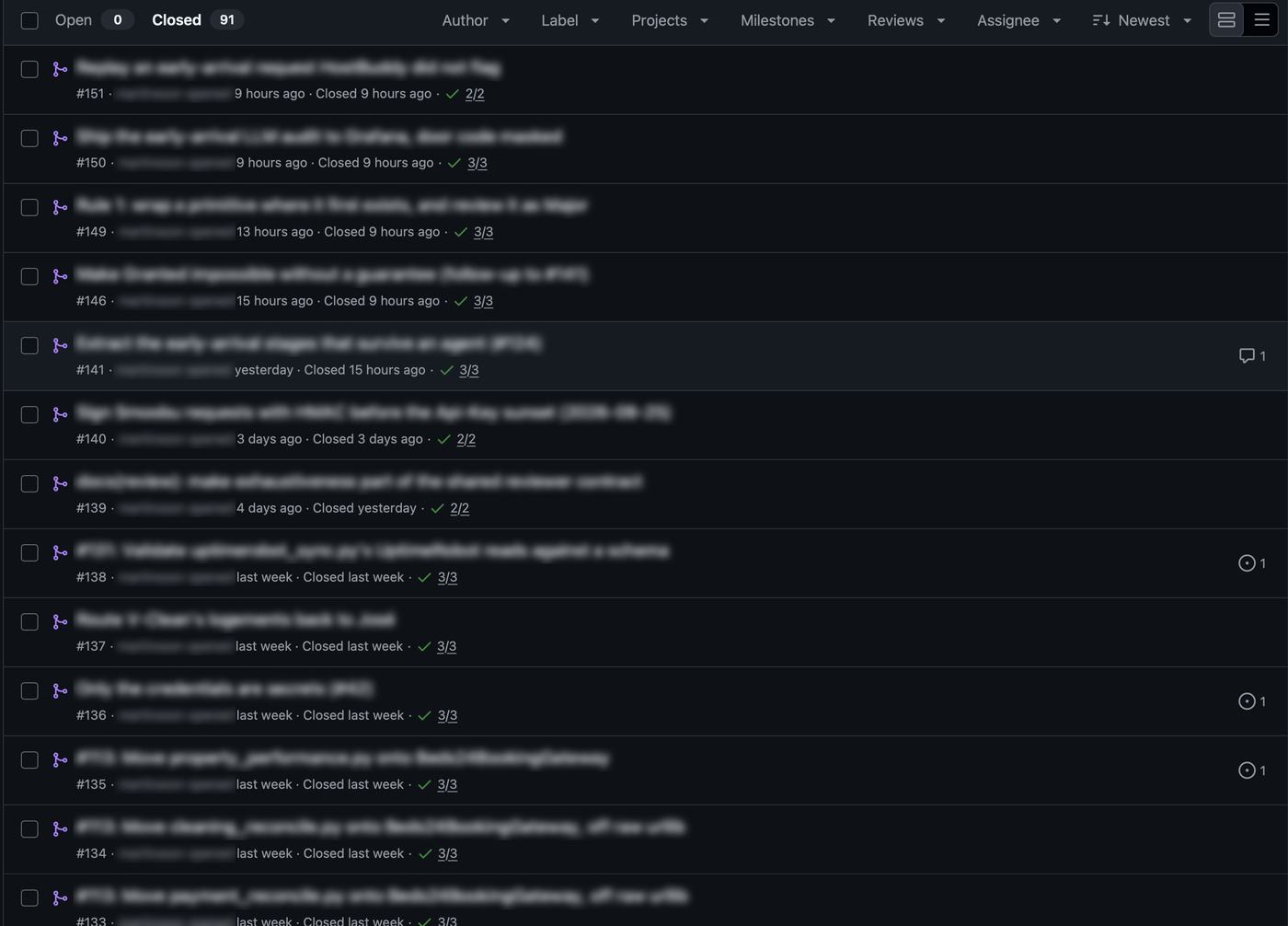
In other teams, I’ve seen the opposite reaction. Generate everything and put up with it. “We spend four times as long reviewing PRs. It sucks, but hey, what can you do?” They’ve accepted it. Their days are made of diffs, and they aren’t going much faster for it.
These two teams aren’t exceptions. In hallway conversations and at the coffee machine, I hear the same questions come back. Developers wonder what is becoming of their job. Managers wonder where the promised productivity gain went.
What I see is a situation that bothers me: an inefficient way of working, topped with needless suffering. Needless, because I don’t think anything forces us to stay there. We stay because we simply haven’t thought of getting out, like the frog in slowly heating water that doesn’t jump out of the pot.
An imbalance
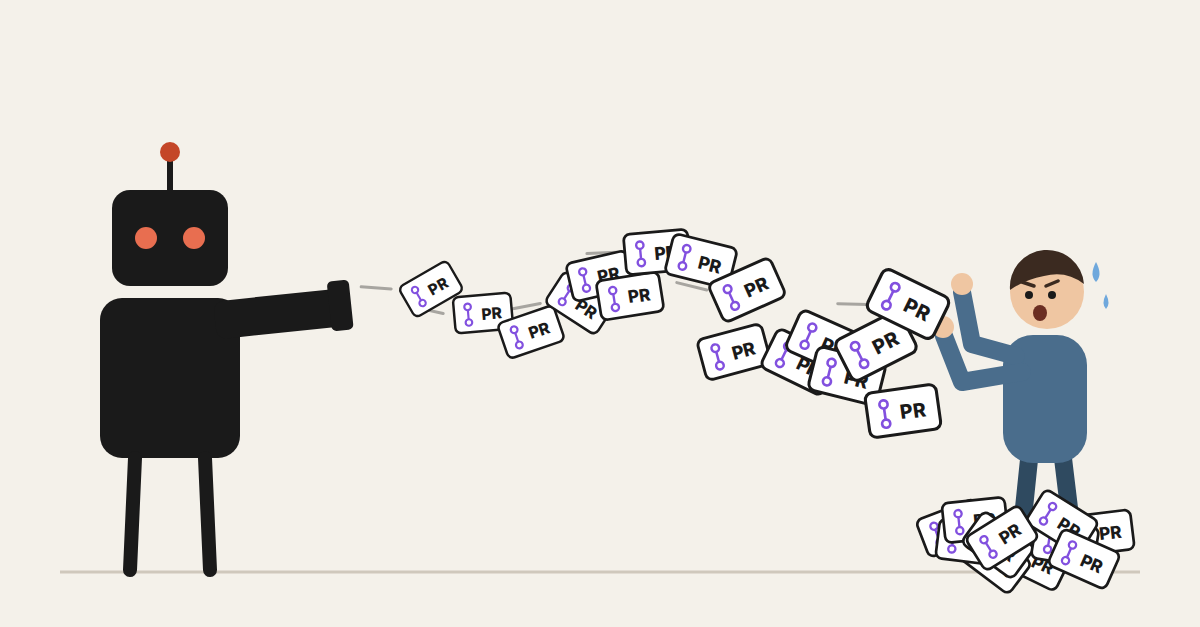
For writing code, we were handed powerful tools that are easy to pick up. For reviewing and deciding to merge, we were handed nothing.
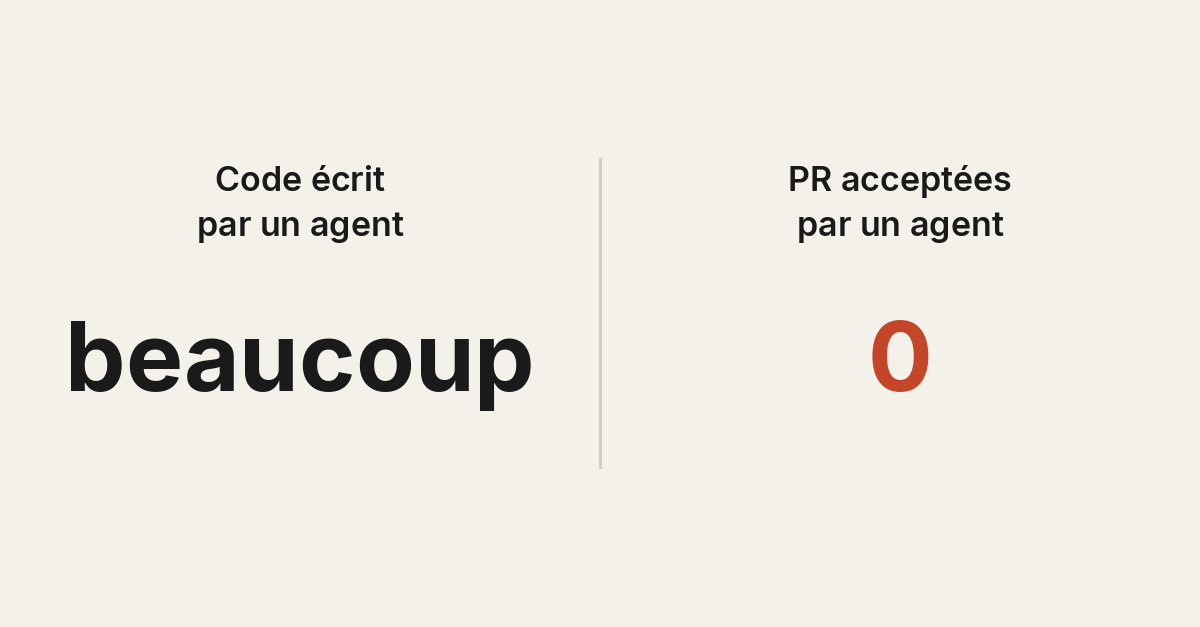
The result: the agent writes a large share of the code, but it reviews nothing and decides nothing. In the teams I come across, no PR is accepted by an agent. All the reviewing has stayed human, while the volume to review has exploded.
Review bots don’t change much. They comment on PRs, but as long as a human reviews everything and decides everything, they mostly add comments to read.
Head down
This imbalance has a cost that is less visible. The best reviewers are often the developers who know the code best. While they work through one diff after another, they aren’t building the tests and tooling that would let them review less.
And nobody looks up. That, in my view, is the main reason nothing changes. There are also real difficulties, which I cover in the next post.
Stepping back
Here are four questions to take away and open up the discussion.
- Is the current situation the result of a decision, or of the absence of one?
- In what situation would developers, and the rest of the team, thrive the most?
- Now that we have agents, what value can only a human bring? Make the list, then compare it with your calendar.
- If review, fixes and the merge decision had to be fully delegated to agents, how would you do it? Whatever you would need to put in place is probably already missing today.
The next post will cover what stops us from delegating review, and the one after that, concrete setups for doing it without sacrificing quality.